
Special Session 8
Special Session 8: Advanced Sensor Materials, Devices, Circuits, and Systems
Description:
This special session focuses on recent advances in sensor materials, devices, and circuit design, providing a platform for researchers and engineers to present innovative technologies and emerging applications in sensing systems. The session covers the development of advanced functional materials and novel device structures for various sensing applications, including physical, chemical, biological, environmental, optical, and electronic sensors.
Particular emphasis will be placed on the integration of novel materials with high-performance sensor devices, interface and readout circuits, signal processing, and system-level design. Topics of interest include, but are not limited to, nanomaterials and functional materials for sensing, flexible and wearable sensors, optical and photonic sensors, gas and chemical sensors, biosensors, semiconductor-based sensing devices, low-power sensor interfaces, analog and mixed-signal circuits, wireless sensing technologies, and intelligent sensor systems.
The session aims to promote interdisciplinary discussion across materials science, electronic engineering, circuit design, and sensing technologies, and to encourage collaboration toward the development of high-performance, energy-efficient, miniaturized, and intelligent sensing platforms for next-generation applications.
Session organizers
Prof. Zong-Liang Tseng, Ming Chi University of Technology, Taiwan
Assoc. Prof. Jian-Fu Tang, National Kaohsiung University of Science and Technology, Taiwan
Assoc. Prof. Tai-Chen Kuo, Chung Yuan Christian University, Taiwan
The topics of interest include, but are not limited to:
• Advanced Materials and Nanomaterials for Sensor Applications
• Novel Sensor Devices and Fabrication Technologies
• Optical, Chemical, Biological, and Semiconductor Sensors
• Advanced Electronic Circuit Design and Applications
• Integrated Circuit Design and Emerging IC Technologies
Submission method
Submit your Full Paper (no less than 10 pages) or your paper abstract-without publication (200-400 words) via Online Submission System, then choose Special Session 8 (Advanced Sensor Materials, Devices, Circuits, and Systems)
Template Download
Introduction of session organizers
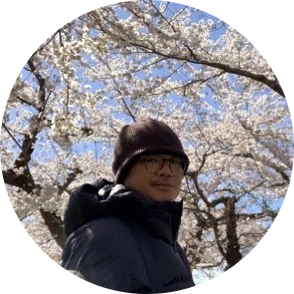
Prof. Zong-Liang Tseng
Ming Chi University of Technology, Taiwan
Prof. Zong-Liang Tseng is a Professor in the Department of Electronic Engineering at Ming Chi University of Technology, Taiwan. His research interests focus on advanced optoelectronic materials and devices, including perovskite materials, quantum dots, light-emitting diodes, photodetectors, solar cells, and emerging sensor technologies. His research particularly emphasizes solution-processed semiconductor materials, nanomaterials, surface and interface engineering, and their applications in next-generation optoelectronic and sensing devices.
Prof. Tseng has extensive experience in interdisciplinary research involving materials science, electronic engineering, and device technology. He has conducted research on perovskite and quantum-dot optoelectronic devices and has actively participated in international research collaborations, academic conferences, and student exchange programs. In addition to his research activities, he has contributed to international conferences as a technical committee member, reviewer, and special session organizer. His current research interests also include the integration of advanced functional materials with electronic and sensing technologies for high-performance, low-cost, and next-generation electronic systems.
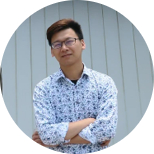
Assoc. Prof. Jian-Fu Tang
National Kaohsiung University of Science and Technology, Taiwan
Prof. Jian-Fu Tang is an Associate Professor in the Department of Semiconductor Engineering at National Kaohsiung University of Science and Technology, Taiwan. His research interests focus on advanced thin-film materials, plasma-assisted deposition, semiconductor materials, and sensing technologies. His research expertise includes physical vapor deposition (PVD), high-power impulse magnetron sputtering (HiPIMS), nanostructured materials, hard and protective coatings, metal-oxide semiconductors, photodetectors, and gas sensors.
Prof. Tang has extensive interdisciplinary research experience in materials science, semiconductor engineering, plasma technology, and electronic devices. His research particularly emphasizes the control of thin-film microstructure, composition, mechanical properties, and functional performance through deposition parameters, plasma conditions, elemental doping, and heterostructure design. He has conducted studies on advanced nitride and boride coatings as well as nanostructured semiconductor materials for optoelectronic and sensing applications. His current research interests include the integration of thin-film engineering, functional nanomaterials, and semiconductor technologies for high-performance, reliable, and next-generation electronic and sensing devices.

Assoc. Prof. Tai-Chen Kuo
Chung Yuan Christian University, Taiwan
Prof. Tai-Chen Kuo is an Associate Professor in the Department of Electronic Engineering at Chung Yuan Christian University, Taiwan. His research interests focus on advanced semiconductor materials, optoelectronic devices, and semiconductor fabrication technologies. His research expertise includes wide-bandgap semiconductor materials, oxide semiconductors, thin-film processing, luminescent materials, photodetectors, and emerging optoelectronic and sensing devices.
Prof. Kuo has extensive interdisciplinary research experience in semiconductor materials, electronic engineering, and device technology. His research particularly emphasizes the relationship between material properties, fabrication processes, and device performance, with applications in next-generation semiconductor and optoelectronic technologies. His recent research interests include β-Ga2O3-based electronic and photodetection devices, micro-LED technologies, semiconductor materials for advanced optoelectronic applications, and emerging fabrication technologies for advanced semiconductor integration. He is also actively involved in industry–academia collaboration and international academic exchange, promoting the integration of advanced materials, semiconductor processing, and device technologies for high-performance and next-generation electronic systems.