
Special Session 7
Special Session 7: AI-Enhanced Digital Forensics and Evidence Recovery for Connected and Cyber-Physical Systems
Description:
Artificial intelligence is reshaping digital forensics by enabling scalable and intelligent methods for the acquisition, recovery, reconstruction, correlation, and interpretation of digital evidence across heterogeneous connected environments. Contemporary investigations increasingly involve mobile and embedded devices, IoT and cyber-physical systems, communication networks, browser and application artifacts, surveillance and UAV storage, multimedia content, and online sources.
This Special Session focuses on AI-assisted digital forensics and evidence recovery, with particular emphasis on methods that improve automation while preserving forensic soundness, reproducibility, and evidential reliability. Topics include machine learning and deep learning for evidence classification and anomaly detection; multimedia and storage recovery; speech, call-data and communication analysis; localization and trajectory reconstruction; browser, application and encrypted-data forensics; OSINT, social-network and darknet analytics for cyber threat intelligence; and forensic analysis of IoT, embedded, and cyber-physical systems.
The session also welcomes research addressing adversarial robustness, data provenance, chain of custody, privacy, explainability, uncertainty, and validation of AI-assisted forensic pipelines. By connecting digital forensics, cybersecurity, communications, artificial intelligence, and embedded and control systems, the session aims to foster practical, reproducible, and trustworthy approaches to digital evidence analysis in complex connected environments.
Session organizers
Assoc. Prof. Leila Rzayeva, Astana IT University, Kazakhstan
Prof. Dr. Erdal Irmak, Gazi University, Turkey
Dr. Gerald Feldman, Birmingham City University, UK
The topics of interest include, but are not limited to:
• AI-Driven Threat Detection, Incident Response, Digital Forensics, and Forensic Readiness
• Forensic Acquisition and Evidence Recovery from IoT/CPS, Embedded, UAV, DVR/NVR, and Storage Systems
• Mobile Application, Browser, Web Activity, and Encrypted Data Forensics
• AI-Based Image, Video, Audio, and Multimedia Evidence Analysis
• Communication and Call-Data Analysis, Localization, Trajectory Reconstruction, and Anomaly Detection
• Open-Source, Social Network, Darknet, and Online Resource Analysis for Cyber Threat Intelligence
• Adversarial Robustness, Privacy, Explainability, Data Provenance, and Chain of Custody in AI-Assisted Forensics
• Reproducibility, Validation, and Trustworthiness of AI-Assisted Forensic Pipelines
Submission method
Submit your Full Paper (no less than 10 pages) or your paper abstract-without publication (200-400 words) via Online Submission System, then choose Special Session 7 (AI-Enhanced Digital Forensics and Evidence Recovery for Connected and Cyber-Physical Systems)
Template Download
Introduction of session organizers

Assoc. Prof. Leila Rzayeva
Astana IT University, Kazakhstan
Leila Rzayeva received her PhD in Automation and Control from L.N. Gumilyov Eurasian National University, Astana, Kazakhstan, in 2016. She is an Associate Professor at Astana IT University and currently serves as Director of the Research and Innovation Center “CyberTech” at Astana IT University and Director of the Information Security Center at the RSE on REM “Digital Government Support Center,” Kazakhstan.
Her research focuses on cybersecurity, digital forensics, artificial intelligence and machine learning, industrial and cyber-physical system security, OT/SCADA security, intelligent data analysis, anomaly detection, and the security of modern communication infrastructures, including 5G/6G and IoT environments. Her research interests also include blockchain security, digital evidence analysis and recovery, predictive analytics, and intelligent decision-support systems for complex digital and industrial infrastructures.
Dr. Rzayeva has authored and co-authored more than 70 national and international scientific publications, including papers indexed in Scopus and Web of Science. She has served on the program committees of international IEEE conferences, including IEEE SIST and IEEE ICAIC, and has extensive experience in organizing international scientific events. She served as Chair of the Organizing, Technical, and Program Committees of ICCSDFAI-2025 and as General Co-Chair of ICCSDFAI-2026.
She is the scientific leader of major research projects in digital forensics and artificial intelligence, including BR24993232, “Development of Innovative Technologies for Conducting Digital Forensic Investigations Using Intelligent Software-Hardware Complexes,” and AP19678773, focused on intelligent preprocessing of aerospace imagery for object recognition and identification.

Prof. Dr. Erdal Irmak
Gazi University, Turkey
Prof. Dr. Erdal Irmak, IEEE Senior Member, is an experienced scholar and researcher in Electrical Engineering with expertise in power system operation and control, voltage and frequency stability, renewable energy integration, and smart grid technologies. His academic work also covers the cybersecurity of critical infrastructures and the development of web-based educational tools, including virtual and remote laboratory platforms for power engineering education.
He has authored over 160 research papers, the majority of which are indexed in the Web of Science, and has led and contributed to numerous national and international research and industrial projects focusing on smart grid control, distributed generation systems, real-time pricing optimization, digital twin modeling, and advanced power quality monitoring and measurement systems.
He serves as an Editor or Associate Editor for several reputable international journals and has held key organizational and technical roles in numerous IEEE-sponsored international conferences. He teaches undergraduate and graduate courses in Electric Power Systems, Smart Grids, and Electrical Energy Distribution.
In addition to his research and editorial activities, Prof. Irmak has held significant academic administrative positions at Gazi University, including Director of the Technical Sciences Vocational School and Vice Director of Graduate Schools. Since 2024, he has also served as Head of the Smart Grids Graduate Program, contributing to institutional development, research capacity building, and academic excellence.
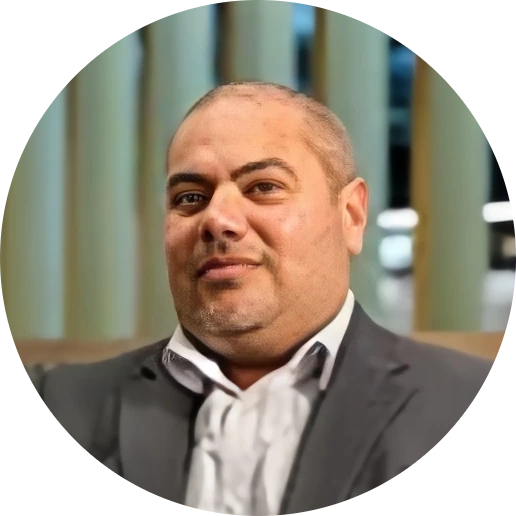
Dr. Gerald Feldman
Birmingham City University, UK
Dr Gerald Feldman holds a Master’s degree in Data and Network Security from Birmingham City University, United Kingdom. He is a lecturer, researcher, and information systems practitioner at Birmingham City University, College of Computing. Dr Feldman has over six years of industry experience managing, designing, and implementing information systems.
His research focuses on business systems analysis, technological change, systems modelling, process mining, and process modelling. His research aims to shift thinking towards a process-led perspective that ensures that a system’s technical, social, environmental, and organisational aspects are considered together to deliver better value to organisations.
Dr Feldman is currently involved in three Knowledge Transfer Partnerships (KTPs) that aim to improve operational efficiency in SMEs as part of their digital transformation strategies.